Here we will list some of the more popular questions from the Ford Six Forum, and some of the replies to those questions. If you don't find the answer to your question, please visit the FordSix.com forum and do a search, as the forum has a huge data log with loads of valuable information available to visitors and forum members.
Questions |
|
Should I rebuild my 200/250ci six, or swap to a V8 like everyone else? |
|
What is the first modification I should do, or which is the best bang for the buck? |
|
How much will it cost to build a six, and where do I start? |
|
What is the primary reason most people build a six? |
|
Is a Port divider really required when installing headers? |
|
Can I install headers if I have Air Conditioning? |
|
How do I know which camshaft to select for my motor? |
|
What is meant by Degreeing the Camshaft, and is it really necessary? |
|
I've heard about premature distributor gear wear, how do I prevent it? |
|
How do I install and wire my Duraspark II Distributor? |
|
How do I install and wire my DUI distributor? |
|
Is the stock fuel pump my only option, or is there a better fuel pump I can use? |
|
Can I use a late model 200/250 head on my ‘65/66 200ci engine? |
|
What makes up the ignition system, and how does it work? |
|
Are ceramic header coatings worth the money, and if so, why? |
|
How does the Load-O-Matic distributor work? |
|
How do I convert my log intake to accept a two barrel carburetor? |
|
Can I install a T5 five speed transmission behind my inline six? |
|
What options do I have for rocker arms, and do high ratio rockers really help? |
|
How do I read my spark plugs and does it really help? |
|
What is the difference in piston rings, and which ones should I use? |
|
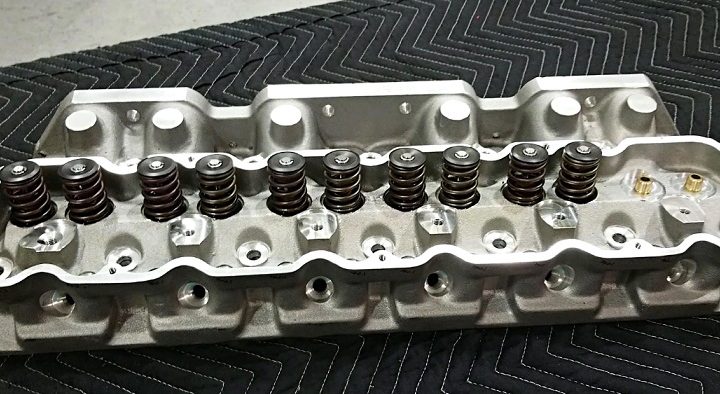
How much valve spring pressure should be used, or which ones I should use? |
|
Is a high volume or high pressure oil pump needed for a performance six? |
|
How do I tune my motor using a vacuum gage? |
|
How do I adjust hydraulic or solid lifter valves? |
|
How do I know what size carburetor to use? |
|
Why are Autolite Carburetors considered the best carbs ever built? |
|
|
Should I rebuild my 200/250ci six, or swap to a V8 like everyone else?
If your just looking for cheap power, a V8 swap is probably the way to go. But if your tired of cookie cutter V8s and are looking for something different, a performance six may be just the ticket. However there are a few things you need to consider before making your decision. First, you need to understand that building a performance six cylinder engine is going to set you back a few bucks and can drain your pocketbook pretty quick if you haven't done your homework and your not prepared. Depending on your goals, your personal experience, and how much of the work you can do yourself, a performance six generally cost twice a much to build as compared to a small block V8, especially if you have to rely on someone else to do all the work.
Selecting the right combination of parts is crucial, but selecting the right shop is just as important, if not more so. Even if they do great work on V8s, the results can be disappointing if they've never built a six. I can't tell you how many times I've heard about shops and engine builders who don't bother to check the compression ratio or degree the cam because its just a six. Make certain your shop is concerned with what they are doing, and if possible, have experience building sixes.
If you like tinkering on engines, prefer something challenging, and have plenty of patience, building an inline six can be very rewarding. By design, inline sixes produce more pavement pounding torque, pound for pound, than their V8 counterparts. They get better gas mileage, attract more attention at car shows, and offer improved handling and braking characteristics due to the reduced weight.
But before you start ordering parts and turning wrenches, we recommend reading our magazine and tech articles, researching forum topics, and purchasing the Falcon Six Handbook. Once you have a fair idea of your goals (keep it realistic), make a plan and establish a budget (try to stick to it). Then, as one of our forum members put it, "Enjoy the Journey".

Back to "Questions"
|
|
|
2) |
What is the first modification I should do, or which is the best bang for the buck?
This has been debated numerous times in the FordSix forum, however it seems most members would agree that the best bang for the buck, or the first modification to do, would be up-grading the ignition system. Tossing the old points style distributor in favor of a electronic or magnetic reluctor style distributor. Either will result in quicker starts, smoother idle, improved throttle response, and usually eliminate flat spots when the system is properly tuned and timed. Dyno test have shown the DSII to produce gains of 5-10hp, while the DUI commonly adds 10-15hp, over a stock dizzy.
Up-grading the ignition system can be accomplished by installing a Petronics electronic ignition, or by swapping to a Duraspark II, Mallory, or DUI Distributor. Prices vary from $100 to $600, depending on the components chosen, whether they are new or used, and where the parts are purchased. We won't cover the Petronics ignition system as there is plenty of information available elsewhere, or the Mallory dual point ignition system as any point style distributor is out-dated technology.
The cheapest way to accomplish a distributor swap, is to purchase used parts from your local salvage yard. Look for a low mileage Ford, such as a 1978 Fairmont, which has the Duraspark II ignition system. Make sure to snag the dizzy, the cap and cap adaptor, the coil and ignition module, and the wire harness.
If you prefer a rebuilt distributor, they can be purchased from most local parts stores for about fifty bucks. Ask for a distributor from a 78 Fairmont, along with a new rotor, a cap, and the cap adaptor. Or you can opt for a rebuilt Duraspark II distributor from Performance Distributor (sold by classic Inlines) which incorporates a full length brass bushing. This full length bushing eliminates top end timing fluctuations, which are common on stock OEM distributors. However a stock distributor will work fine for a daily driver or those built for normal street usage where higher rpm ranges are rarely seen.
For ignition control modules you have several options, including the stock Ford Blue Strain module, a 4-pin GM module, MSD's 6A module (or any aftermarket module similar to a MSD-6A), or Performance Distributors Dyna module and Inferno Coil, which is sold by Classic Inlines.
The DUI Ignition System, sold exclusively by Classic Inlines, offers a new billet dizzy which is based on the popular HEI ignition system commonly found in GM vehicles. The DUI distributor has a Dyna Module and the coil installed inside the cap, which eliminates the need for a separate ignition module and/or external coil. While the DUI is the highest priced of all options, it offers the best performance, in a compact and easy to wire system. It is easier to service, and replacement parts are generally cheap. Replacement parts, such as the cap and rotor, can be purchased at any parts store, which is not the case for DSII ignition systems. Many parts stores no longer carry replacement parts for the DSII distributors due to their age, however they can be special ordered in a day or two. While this isn't a concern for normal service, it is something to consider if you travel the open road frequently. Breaking down is no fun, especially if you have to spend a day or two waiting for parts to arrive.
For more information on the Duraspark II and DUI distributor swaps please see our Tech Articles, which cover installation, wiring, and re-curving.

Back to "Questions"
|
|
|
3) |
How much will it cost to build a six, and where do I start?
This is a question I hear everyday, sometimes several times a day, over the phone and by e-mail. For us old timers it can get annoying, so bear with us if someone gives you a short answer, or a rude reply.
To answer such a vague question is time consuming and difficult at best. You'll be much better off if you do some research first, on your own, then ask specific questions on the things you don't understand. Here's a few good resources to get you started.
Purchase the Falcon Six Performance Handbook.
http://classicinlines.com/proddetail.asp?prod=FSP%2D200%2DFSH
Read through the various tech articles on this website.
http://classicinlines.com/tech.asp
Search the forum. There are hundreds of topics covering this subject.
http://www.fordsix.com
Look for website's hosted by forum members. Here's a good example:
http://www.geocities.com/mustang_man_1966/index.html
You don't need a lot of money to get started, but in general you'll find it cost considerably more to build a performance six, vrs a V8. Much of the cost depends on your experience level, or how much of the work you can do yourself. If you have to pay a shop to do everything, you can easily wind up spending more of your hard earned dollars for labor, rather than parts. Look for a shop that has experience building sixes, preferably with plenty of customer referals. The worst situation is to wind up paying a shop to experiment with your engine, only to end up with a motor that doesn't run. And this happens more often than you might think, even when the shop comes highly recommended by your buddy, with the V8. Be especially weary of the so called "Award Winning" shops.
Most backyard (or DIY) mechanics can handle headers, ignition upgrades, and carb swaps without any problems., however they may need help jetting the carb and tuning the engine for the best performance. One of the most beneficial modifications, is upgrading the cam. Therefore, if a valve job or cylinder head swap is planned, make the most of it by swapping out the cam while the head is off. Unlike a V8, the cylinder head must be removed to swap out the cam (or to remove the lifters). While your at it, install larger valves, do some basic cleanup work, or have the head professionally ported for improved air flow. When you swap the cam, or even if you use a stock cam profile, make sure you upgrade the valve springs and pushrods. Stock springs will float around 4500rpm, when they are new, not to mention using old and worn out springs.

Back to "Questions" |
|
|
4) |
What is the primary reason most people build a six?
We recently did a poll on the FordSix forum, asking members why they built their sixes rather than swapping to a V8. To see a summary of the more interesting replies,
click here.
To view the actual topic and all replies, click here.
|
 Economy-mileage
|
|
 Performance
|
|
 Appearance
|
|
 To be Different
|
|
 Other
|
|
|
| |
Back to "Questions" |
|
|
5) |
Is a Port divider really required when installing headers?
This topic has also been debated many times in the FordSix forum. The general consensus among forum members is that port dividers are not needed and do little to assist performance. To our knowledge there are no dyno test proving otherwise. The only thing known for sure, is that the make a horrendous rattle when they break loose, due to poor or improper installation. Several members have installed the port dividers, only to remove them to stop the rattling. Once removed, they can tell no difference in performance, based on seat of the pants testing. They may however assist in preventing blown head gaskets, but this too is unknown for sure. The only recommendation we will make, is to follow the directions to the letter when installing one. Don't take short cuts and make sure they are welded in place (no JB Weld).

Back to "Questions" |
|
|
6) |
Can I install headers if I have Air Conditioning?
It has been stated by others, that headers may not be installed if you have air conditioning. Classic Inlines has shown that headers can be installed, providing you modify the A/C bracketry to provide adequate clearance for the header pipe coming off the number one cylinder. Please see our Tech Article "Installing Headers with A/C"
Back to "Questions" |
|
|
7) |
How do I know which camshaft to select for my motor?
Classic Inlines has written several tech articles to assist you in selecting the proper camshaft. First you'll need a good understanding of camshaft technology, which can be obtained by reading our article on "Selecting the Right Cam". Next you'll need to know the differences between "Static vrs Dynamic Compression Ratios". Once you have a firm understanding of both, you should be able to make an informed decision on which camshaft profile best suits your specific engine build. However if you still have concerns, we'd be happy to suggest a camshaft for you. Just drop us an email with as much information as possible on your engine build, and the specifics of your vehicle (tranny type, rear gear ratio, type of driving, tire size, etc).
Back to "Questions" |
|
|
8) |
What is meant by Degreeing the Camshaft, and is it really necessary?
The term "Degreeing In Your Camshaft" means you are making sure the camshaft's position in the engine coincides with that of the crankshaft, so that their rotation is synchronized. This is the only way you will know if the rise and fall of the pistons properly matches the opening and closing of the valves, so the engine will run properly. A few degrees of misalignment can affect the engine's operation dramatically.
If the circumstances were perfect, one would only need to line up the marks on the timing chain sprockets and the cam would be degreed. In reality, you are dealing with a group of components (the camshaft, crankshaft, timing chain, and sprockets), all with their own standards and tolerances. These tolerances stack up against you and can throw your camshaft out of alignment. Without degreeing the cam you can never be sure that the parts are in correct position. If you have the tools, we always recommend that the camshaft's position in the engine be degreed in. If you don't have the tools, borrow or purchase them.
For more information, please read our tech article "Degreeing your Camshaft".
NOTE: It should be noted that all Clay Smith Cams are ground straight up, whereas most other cam manufactures grind their cams with a four degree advance. Therefore we recommend degreeing the Clay Smith Cam with 4 degrees of advance when installing and degreeing the cam.
Back to "Questions" |
|
|
9) |
I've heard about premature distributor gear wear, how do I prevent it?
Premature Distributor Gear Wear can be caused by several different conditions that may exist in your engine. However the question is much to complicated and the answer to lengthy to respond here. To get an understanding on how to prevent gear failures, please read our tech article on "Distributor Gear Failures".
Back to "Questions" |
|
|
10) |
How do I install and wire my Duraspark II Distributor?
While the wiring for a duraspark dizzy looks intimidating, it's really pretty simple. Study the wiring diagram and make sure you understand the connections before attempting the swap. A wiring diagram is provided in our tech article, as well as easy to follow instruction for the swap.
For more information, please read our tech article "Duraspark II Distributor Swap" .

Back to "Questions" |
|
|
11) |
How do I install and wire my DUI distributor?
Installing a DUI dizzy is extremely simple. Just follow the directions and you can't go wrong. The wiring only requires a one wire hookup to a 12V supply. We prefer using a relay for full voltage from the battery, as seen in the wiring diagrams provided in our tech section.
For more information, please read our tech article "Installing the DUI Distributor" .

Back to "Questions" |
|
|
12) |
Is the stock fuel pump my only option, or is there a better fuel pump I can use?
Unfortunately there are no manufacturers currently producing a high performance fuel pump for the inline sixes. However a Carter Super Pump can be modified to work on the six, simply be swapping the arms.
For more information, please read our tech article "Carter Fuel Pump Modification" .
Back to "Questions" |
|
|
13) |
Can I use a late model 200/250 head on my ‘65/66 200ci engine?
For more information, please read our tech article "Small Six Cylinder Head Swap".

Back to "Questions" |
|
|
14) |
What makes up the ignition system, and how does it work?
Our tech article covers the basics of an ignition system, ignition timing, and vacuum advance, as well as the various ignition upgrades for your small six.
For more information, please read our tech article "Ignition and Timing".

Back to "Questions" |
|
|
15) |
Are ceramic header coatings worth the money, and if so, why?
Classic Inlines strongly recommends the use of ceramic coatings for several reasons. Topics such as Heat reduction, rust prevention, appearance, safety, and improved performance are covered in our tech article.
For more information, please read our tech article "Jet-Hot Ceramic Coatings".
Back to "Questions" |
|
|
16) |
How does the Load-O-Matic distributor work?
For more information, please read our tech article "Load-O-Matic Distributor".

Back to "Questions" |
|
|
17) |
How do I convert my log intake to accept a two barrel carburetor?
For more information, please read our tech article "Installing a 2V Carburetor".

Back to "Questions" |
|
|
18) |
Can I install a T5 five speed transmission behind my inline six?
For more information, please read our tech article "Transmission Solutions".

Back to "Questions" |
|
|
19) |
What options do I have for rocker arms, and do high ratio rockers really help?
For more information, please read our tech article "Rocker Arm Options".

Back to "Questions" |
|
|
20) |
How do I read my spark plugs and does it really help?
Being able to "read" a spark plug can be a valuable tuning aid. By examining the insulator firing nose color, an experienced engine tuner can determine a great deal about the engine's overall operating condition.
In general, a light tan/gray color tells you that the spark plug is operating at optimum temperature and that the engine is in good condition. Dark coloring, such as heavy black wet or dry deposits can indicate an overly-rich condition, too cold a heat range spark plug, a possible vacuum leak, low compression, overly retarded timing or too large a plug gap. If the deposits are wet, it can be an indication of a breached head gasket, poor oil control from ring or valve train problems or an extremely rich condition - depending on the nature of the liquid present at the firing tip.
Signs of fouling or excessive heat must be traced quickly to prevent further deterioration of performance and possible engine damage.
For more information, please read our tech article "Spark Plug Readings".

Back to "Questions" |
|
|
| 21) |
What is the difference in piston rings, and which ones should I use?
The single most important factor to be considered in selecting the compression (top) ring face
coating material, is the service requirements the engine will be operated under. Will the engine be
subjected to unusual speed or load (high temp conditions), stop and go short trip driving, occasional or
regular strip use, or in a high dust or dirt environment? Once this has been determined, simply select from the three popular types of compression ring face coatings, which are cast iron, moly, and chrome. Each has
advantages of its own, with respect to operating conditions.
Cast Iron rings for typical light duty service where the vehicle is not subjected to long periods of high speed or load operation and is run primarily on paved streets.
Moly rings when faced with occasional or continuous high speed and/or load conditions, where the engine is subject to periods of high temperature ranges.
Chrome rings when a dusty environment is encountered while operating on dirt or unpaved roads (off-road).
For more information, please read our tech article "Selecting the Proper Ring Set".

Back to "Questions" |
|
|
| 22) |
How much valve spring pressure should be used, or which ones I should use?
Valve springs are one of the most critical components of your engine. It is very important to match the camshaft and potential RPM range with the correct spring rate. You may have heard that too much spring pressure is hard on valves. In truth, what’s hard on valves is the speed at which they contact the valve seat when closing. What dictates how hard the valve hits the seat? It’s supposed to be the camshaft closing ramp (cam lobe), but when the spring pressure is too low the valve does not follow it’s intended path and instead slams into the seat and actually bounces. Hence higher spring pressures can actually aid the valve by forcing it to more closely follow the shape of the cam lobe. However to much valve spring pressure adds to friction and valve train component wear. Therefore it is important to match the spring pressure to the profile of the camshaft.
For more information, please read our tech article "Selecting the Proper Springs".
Back to "Questions" |
|
|
| 23) |
Is a high volume or high pressure oil pump needed for a performance six?
First off, no manufacturers currently produce a high volume or high pressure oil pump for the small inline six. But for good reason, they simply are not needed. High volume or high pressure oil pumps are only required on full race engines, where the designed bearing clearances are to loose to maintain the required oil pressure. A freshly rebuilt motor with the proper bearing clearances will maintain an adequate oil pressure with a stock OEM style pump, which should be somewhere between 30-60 lbs.
NOTE:
High volume/pressure oil pumps are a major factor in premature distributor gear failures, and are not recommended or required for normal street applications.
For more information, please read our tech article "Understanding Oil Pressure".
Back to "Questions" |
|
|
| 24) |
How do I tune my motor using a vacuum gage?
One of the simplest, as well as most accurate tuning tools...... is the vacuum gauge. In most cases if you use a quality large faced Vacuum gauge, with some experience you can effectively tune your engines fuel and timing requirements. This is not the end all means of tuning, but it can be very helpful in diagnosing and tuning your engine when used properly and in conjunction with the spark plug readings.
For more information, please read our tech article "Tuning with a Vacuum Gage".

Back to "Questions"
|
|
|
| 25) |
How do I adjust hydraulic or solid lifter valves?
First, you must determine if you have solid lifters, or hydraulic lifters. Solid lifters were commonly used on the early 144/170ci motors, while hydraulic lifters were used on the later 144/170ci and 200/250ci motors. However, this is only a rule of thumb. Once you have determine which lifters you have, simply follow the instructions in our tech article.
For more information, please read our tech article "Adjusting Your Valves ".
Back to "Questions" |
|
|
| 26) |
How do I know what size of carburetor to use?
The only way to know what size carb is best suited to your motor, you need to use a CFM calculator (formula), which is really pretty simple. Never guess, as one of the most common mistakes is to over-carb a performance motor. When in doubt, always use the smaller carb. Bigger is not better.
|
|
|
| 27) |
Why are Autolite Carburetors considered the best carbs ever built?
Classic Inlines, among many others, consider the Autolite Carburetors to be the best carbs ever built. To understand why, please read our tech article on Autolite Carbs.
|
  

|